Showing posts with label Culture. Show all posts

Sunday, 28 July 2013

Biodiversity and Sustainability Are Closely Linked to Cultural Diversity by Dr. Steve Best


The nature of evolution is speciation — to produce diversity of life, even in the harshest and most challenging conditions. Indeed, after the five previous major extinctions events on earth, nature responded not only by restabilizing ecological dynamics, but by proliferating even more life and enhancing biodiversity such as happened during the Cambrian Explosion.

The diversity of life involves not only the proliferation of plant and animal species, but also of unique human cultures and languages. At all levels, we are currently losing the rich diversity of biological, cultural, and linguistic forms; in a profound sense, we can no longer speak of “evolution” but rather must understand that planet earth is undergoing a profound devolutionary process in the sense that diversity of all kinds is rapidly receding not advancing.

Thus, in the midst of the sixth extinction crisis in the history of this planet that is currently underway, we are also witness to the precipitous loss of cultural and linguistic diversity as well, as we leave the prior Holocene epoch and enter the new Anthropocene era. This new and emergent geological epoch is  defined by the dominant role played by humans, not the natural world, in altering the planet, and clearly not in desirable ways. Beginning in the mid-nineteenth century, the combined forces of the modernization, the Industrial Revolution, fossil-fuel addiction, a grow-or-die metastasizing system of global capitalism, the spread of agribusiness and rising world meat consumption, human overpopulation, mass culture, rampant consumerism, and other forces have brought about habitat loss, rainforest destruction, desertification, climate change, and species extinction.

In fact since the emergence of agricultural society 10-15,000 years ago, the now dominant mode of production began a war of extermination against hunting and gathering tribes that preserved traditional nomadic and non-hierarchical life ways, as opposed to the growth-oriented, hierarchical farming societies based on domesticating nature and animals, obsessive concerns with control, expansion, war, and conquest.

The war still being waged against indigenous peoples, first nations, and other non-modern/non-Western cultures certainly fully advanced with colonialism five centuries ago, but ultimately is a continuation of the exterminism agricultural society launched against all peoples who did not conform to the pathological imperatives of “civilization” and “progress.”

While from the standpoint of the earth and nonhuman animal species, the ideal would be for Homo rapiens as a whole to die off as rapidly as possible. But the alternative to what most humans find repugnant and nauseating, for those who believe we still have a right to inhabit this planet even if we prove we do not have the ability to harmonize our societies with animal communities and the natural world as a whole, is to do everything possible to resist global capitalism and its war against tribal and indigenous peoples everywhere.

For not only is it vital that indigenous peoples and ancient lifeways be preserved in their own right against the genocidal onslaught of global capitalism, and that we have more diverse languages, cultures, and lifeways than market societies and forces of cultural homogenization will tolerate. It is also crucial, if we want to preserve what biodiversity is left, that we protect and preserve premodern and non-traditional peoples.

One obvious reason — although this has often been overstated in romanticized ways — is that they retain a more reverential ethic toward the earth, they have a far deeper connectedness to life and land, they value tradition over novelty and create far more sustainable cultures, and that they are far more capable of caring for the earth and animals that predatory and rapacious capitalist societies.

Despite the fact that indigenous peoples (such as the Clovis Indians who first inhabited North America) have often throughout history overshot ecological limits and driven animals into extinction, they nonetheless are clearly more suited “custodians” of the earth than the IMF, World Bank, WTO, ExxonMobil, Shell, Monsanto, Cargill, Maxxam, Du Pont, Japanese whalers, NGOs, ignorant narcissistic Western consumers, and so on. 

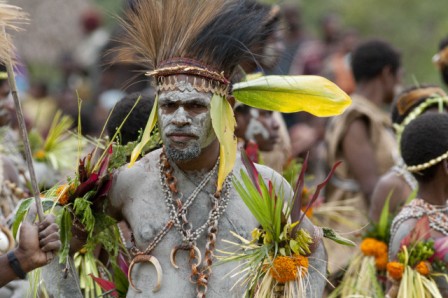
As the essay below makes clear, the areas now highest in biodiversity are the same areas inhabited by indigeous peoples (and this is partly so because plant and animal species are struggling to adjust to escape the ravages of climate change). Thus, the key to preserving what biodiversity remains amidst the rapidly unfolding sixth extinction crisis in the history of the planet is to preserve the remaining cultural and linguistic diversity — to support, help defend, and sustain the indigenous peoples inhabiting the areas with the most dense and diverse plant and animal species.

Thus, here we see yet another vivid example of the politics of total liberation, and how the multiple struggles to save humans, animals, and nature from the devastating effects of the capitalist-dominated Anthropocene era are ultimately one struggle ad must be formulated in theory and practice accordingly.

So there are two main options to save biodiversity: either through the collapse of “civilization” and the extinction of the human species, or through advancing the only politics suitable for the twenty-first century and era of global social and ecological crisis — a politics of total liberation that preserves biodiversity by preserving cultural and linguistic diversity. And this, unavoidably, demands a total war against global capitalism and the sundry institutions and forces of destruction bound up with advanced market societies and this nihilistic world system.


By Dady Chery, News Junkie Post, Oct 11, 2012


An unprecedented study of global biological and cultural diversity paints a dire picture of the state of our species.


Like the amphibians that climb to ever tinier areas at higher altitudes to avoid being extinguished by global warming, most of the world’s species currently huddle in a tiny fraction of the Earth’s surface, and most human cultural diversity — as measured by the number of languages — occupies essentially the same tiny fraction of the planet.


We are dying.


A scientist would never say it quite this way. Instead, he would tell you that the world’s animal and plant species are disappearing 1,000 times faster than ever in recorded history. He might add that some areas of the world have lost 60% of their languages since the mid-1970’s, and 90% of the world’s languages are expected to vanish by the year 2099.


In Haitian Creole, we would yell “Amwe!” (Help!), and this would be right and proper.


As ever, the best scientific studies merely quantify what everybody has known all along. Life, in general, has suffered horribly from the runaway spread of European values and the notions of progress that began with the Industrial Revolution. A sharp bit of mathematics finally brings forth the maps that expose the poverty of the world’s major carbon emitters and the little wealth that remains in those parts of the world where the indigenous are making their final stand.


High-biodiversity wilderness areas


There currently exist very few places on Earth that could be considered intact. The researchers found only five such areas, which are numbered 36-40 on the biodiversity map and colored in shades of green.


These are, by number: 36: Amazonia; 37: Congo Forests; 38: Miombo-Mopane Woodlands and Savannas; 39: New Guinea; 40: North American Deserts.


Together these intact spots amounted to only about six percent of the terrestrial surface but were home to 17 percent of vascular plants and eight percent of vertebrates that could not be found anywhere else. The same areas were the refuge for 1,622 of the world’s 6,900 languages, with little New Guinea topping the chart at 976 tongues.


The only glimmer of hope from the study was the discovery that, contrary to what conservationists might presume, a place does not have to be untouched by humans to serve as a refuge for the world’s plants and animals. Instead, habitats must be handled in the right way, and more than anything, they must be protected from the kinds of blows dealt by industrialization.


Biodiversity hotspots


The researchers additionally identified 35 “biodiversity hotspots” (numbered 1-35 and colored in shades of yellow to red on the biodiversity map), defined as places with a high density of endemic species despite having lost over 70% of natural habitat.


These were, by number: 1: Atlantic Forest; 2: California Floristic Province; 3: Cape Floristic Region; 4: Caribbean Islands; 5: Caucasus; 6: Cerrado; 7: Chilean Winter Rainfall-Valdivian Forests; 8: Coastal Forests of Eastern Africa; 9: East Melanesian Islands; 10: Eastern Afromontane; 11: Forests of East Australia; 12: Guinean Forests of West Africa; 13: Himalaya; 14: Horn of Africa; 15: Indo-Burma; 16: Irano-Anatolian; 17: Japan; 18: Madagascar and the Indian Ocean Islands; 19: Madrean Pine-Oak Woodlands; 20: Maputaland-Pondoland-Albany; 21: Mediterranean Basin; 22: Mesoamerica; 23: Mountains of Central Asia; 24: Mountains of Southwest China; 25: New Caledonia; 26: New Zealand; 27: Philippines; 28: Polynesia-Micronesia; 29: Southwest Australia; 30: Succulent Karoo; 31: Sundaland; 32: Tropical Andes; 33: Tumbes-Chocó-Magdalena; 34: Wallacea; 35: Western Ghats and Sri Lanka.


The biodiversity hotspots amounted only to about two percent of the Earth’s surface, but they were home to a whopping 50% of plant species and 43% of vertebrates that could be found nowhere else. Again, there was a stunning correlation of biodiversity with culture, with the hotspots being home to 3,202 of the world’s languages.


Biodiversity is being lost, but what’s far worse is that the ability to express this loss is vanishing. For example, 1,553 of the languages in hotspots were spoken by only 10,000 or fewer people, and 544 were spoken by fewer than 1,000 people. Ironically, the American researchers who did this study are now regarded as experts on biodiversity, although the only real experts on how to maintain biodiversity in places occupied by humans are the world’s indigenous.


The logical conclusion to take from this study is that modern science, with all its sophisticated technology, is completely trumped by the thousands of years of experimentation by the world’s indigenous, although their findings have been transmitted by oral tradition and other simple means. To be fair, it isn’t so much the fault of modern science as the fault of the industrialized world, which worships power, greed, and the absurdity of exponential growth.


One cannot disdain all other living beings, grind mountains to extract minerals, build roads without a thought for habitat fragmentation, design gardens to please only human aesthetics, or harvest monocultures that serve solely human needs, and expect one’s world to continue for long. There is room for humans at Earth’s banquet, but only those who have lived in place long enough to have learned the contours of their terrain, the language of their plant and animal neighbors and, more than anything, the needs of non humans.


When a shaman leaves a lock of his hair where he has uprooted a medicinal cactus, it is not a bit of imbecility, but a humble acknowledgement that, for each living thing taken, one must give a bit of oneself, however small. For centuries humans have spilled their most beloved animals’ blood to the earth to acknowledge the cyclical aspects of life in preparation for battle and celebration of life’s milestones. These are not concepts that a pharmaceutical corporation could ever understand.


As for every other scientific report, this one concludes that yet more study will be needed, but what is needed, and urgently so, is more humility, because as the world’s indigenous cultures go, so does all humanity.

 (Source)


-----------------------------------------------
OFFICIAL LINKS
* Facebook: National-Anarchist Permaculture Information Network
* Facebook: National-Anarchist Survivalist and Preparedness Circle
* Facebook: National-Anarchist Spanish Speaking Resistance
* Contacts: N-AM Links


Monday, 8 October 2012

Organic Farming: Resilience in the Time of Drought

As climate change brings extreme weather, organic farmers say their methods are the answer

While the historic drought that has plagued the Midwest for months wreaks havoc upon many conventional farmers' soil, organic farmers are saying it is not conventional farming or genetically modified crops that will save agriculture from the effects of climate change. Rather, organic farming is the best way forward to be resilient in the age of climate change.

As Mother Jones writer Tom Philpott has written, the drought has laid bare the failure of industrial, or conventional farming. "The message from the Midwest is clear: Chemical-intensive, industrial-scale farming is vulnerable to spells of hot, dry weather—some of the very conditions we can expect to become common as the climate warms," writes Philpott.

University of Illinois small farm advisor James Theuri tells Al Jazeera that organic farming can beat those vulnerabilities. "If indeed we are going to see a climate change and we are going to see less of rain," says Theuri, "organically managed soils will definitely have advantages over conventionally managed soils." Of conventional farming, he says, "We are destroying life below ground."

Unlike industrial farming, organic farmers' soil conservation techniques are better prepared to weather droughts.

Jonathan Foley, director of the Institute on the Environment at the University of the Minnesota, has noted that "decades of industrial farming have depleted the natural organic matter (and 'tilth') of many Midwestern soils, reducing their ability to absorb and store moisture. Fortunately, no-till agriculture and organic farming practices can restore the health of the soil, and greatly improve the resilience of crops to extreme weather."

Organic farmer Molly Breslin tells Al Jazeera, "A lot of people say organic food can't feed the world, and my response is, if we put as much money into research for organic agriculture research as we do for conventional agriculture, then I think that that would probably be a different story."


-----------------------------------------------

Sunday, 7 October 2012

Bhutan aims to be first 100% organic nation

Bhutan's focus on wellbeing and the
environment has caught the UN's eye

NEW DELHI — The Himalayan kingdom of Bhutan, famed for seeking "happiness" for its citizens, is aiming to become the first nation in the world to turn its home-grown food and farmers 100 percent organic.
The tiny Buddhist-majority nation wedged between China and India has an unusual and some say enviable approach to economic development, centred on protecting the environment and focusing on mental well-being.

Its development model measuring "Gross National Happiness" instead of Gross Domestic Product (GDP) has been discussed at the United Nations and has been publicly backed by leaders from Britain and France, among others.

It banned television until 1999, keeps out mass tourism to shield its culture from foreign influence, and most recently set up a weekly "pedestrians' day" on Tuesdays that sees cars banned from town centres.
Its determination to chart a different path can be seen in its new policy to phase out artificial chemicals in farming in the next 10 years, making its staple foods of wheat and potatoes, as well as its fruits, 100 percent organic.

Two-thirds of Bhutan's 700,000
strong population depend on farming
"Bhutan has decided to go for a green economy in light of the tremendous pressure we are exerting on the planet," Agriculture Minister Pema Gyamtsho told AFP in an interview by telephone from the capital Thimphu.

"If you go for very intensive agriculture it would imply the use of so many chemicals, which is not in keeping with our belief in Buddhism, which calls for us to live in harmony with nature."

Bhutan has a population of just over 700,000, two-thirds of whom depend on farming in villages dotted around fertile southern plains near India and the soaring Himalayan peaks and deep valleys to the north.
Overwhelmingly forested, no more than three percent of the country's land area is used for growing crops, says Gyamtsho, with the majority of farmers already organic and reliant on rotting leaves or compost as a natural fertiliser.

"Only farmers in areas that are accessible by roads or have easy transport have access to chemicals," he explained, saying chemical use was already "very low" by international standards.

In the large valleys, such as the one cradling the sleepy capital Thimphu, chemicals are used to kill a local weed that is difficult to take out by hand -- a challenge compounded by a lack of farm labour.

Elsewhere, the fertiliser urea is sometimes added to soil, while a fungicide to control leaf rust on wheat is also available.

Bhutan has been determined to phase
out artificial chemicals in farming
"We have developed a strategy that is step-by-step. We cannot go organic overnight," Gyamtsho said, describing a policy and roadmap which were formally adopted by the government last year.

"We have identified crops for which we can go organic immediately and certain crops for which we will have to phase out the use of chemicals, for rice in certain valleys for example."

Bhutan's only competitor for the first "100 percent organic" title is the tiny self-governing island of Niue in the South Pacific, which has a population of only 1,300. It aims to reach its objective by 2015-2020.

Nadia Scialabba, a global specialist on organic farming at the UN's Food and Agriculture Organisation, says the organic food market and its premium prices are attractive for small countries and territories.

"This is happening in very small countries who are not competitive on quantity, but they would like to be competitive in quality," she told AFP.

The country's staple foods of
wheat and potatoes are
100-percent organic
The global organics market was estimated to be worth 44.5 billion euros (57 billion dollars) in 2010, according to figures from the Research Institute of Organic Agriculture and the International Federation of Organic Agriculture Movements.

Bhutan sends rare mushrooms to Japan, vegetables to upmarket hotels in Thailand, its highly-prized apples to India and elsewhere, as well as red rice to the United States.

By shunning fertilisers and other chemicals, the country also stands to gain by reducing its import bill -- a particular concern for a country short on foreign currency.

Peter Melchett, policy director at Britain's organic Soil Association, says the main benefit of becoming 100 percent organic is an assurance of quality to consumers.

"Because there won't be pesticides or other chemicals on sale in the kingdom, they would be able to offer a high level of guarantees that products are organic," Melchett explained.

In countries like Spain, for example, there is a problem of contamination when organic farms are next to highly industrialised producers using large quantities of artificial chemicals, Melchett said.

"It's difficult for organic farmers in those circumstances to keep their crops and supply-chain free of contamination."

Bhutan's organic policy would "start to give the country a reputation of high quality organic food which in the long-run would give them a market advantage and the possibility of price premiums," he added.

Jurmi Dorji, a member of the 103-strong Daga Shingdrey Pshogpa farmers' association in southern Bhutan, says his fellow members are in favour of the policy.

"More than a decade ago, people realised that the chemicals were not good for farming," he told AFP. "I cannot say everyone has stopped using chemicals but almost 90 percent have."

(Source)

-----------------------------------------------

Wednesday, 3 October 2012

Interview with Craig Fitzgerald (October 3, 2012 - ATS/CC Radio Interview)

Broadcast October 3, 2012 - Keith Preston Interviews Craig Fitzgerald for Attack the System on Counter-Currents Radio.

Craig Fitzgerald is one of the founders of the National Anarchist Tribal Alliance of New York.
Topics discussed:

  • Why nationalists aught to consider National Anarchism.
  • Chris’ progression from Left-wing Anarchism to National Anarchism
  • The degree to which the State can actually be abolished in a viable society
  • The degree to which National Anarchism can accomodate those who believe in a State but oppose the current State.
  • Agorism and shadow economies
  • Institutions local communities can form
  • Homesteading and self-sufficiency
  • The pervasiveness of instant gratification
  • Is National Anarchism against technology and urban societies?
  • National Anarchism and cultural preservation.

    Click Play Below For The Interview


    For other interviews with Craig Fitzgerald please click here.
(Source)

-----------------------------------------------

Tuesday, 25 September 2012

Are You An Anarchist? The Answer May Surprise You! (David Graeber)


Chances are you have already heard something about who anarchists are and what they are supposed to believe. Chances are almost everything you have heard is nonsense. Many people seem to think that anarchists are proponents of violence, chaos, and destruction, that they are against all forms of order and organization, or that they are crazed nihilists who just want to blow everything up. In reality, nothing could be further from the truth. Anarchists are simply people who believe human beings are capable of behaving in a reasonable fashion without having to be forced to. It is really a very simple notion. But it’s one that the rich and powerful have always found extremely dangerous.

At their very simplest, anarchist beliefs turn on to two elementary assumptions. The first is that human beings are, under ordinary circumstances, about as reasonable and decent as they are allowed to be, and can organize themselves and their communities without needing to be told how. The second is that power corrupts. Most of all, anarchism is just a matter of having the courage to take the simple principles of common decency that we all live by, and to follow them through to their logical conclusions. Odd though this may seem, in most important ways you are probably already an anarchist — you just don’t realize it.

Let’s start by taking a few examples from everyday life.

If there’s a line to get on a crowded bus, do you wait your turn and refrain from elbowing your way past others even in the absence of police?

If you answered “yes”, then you are used to acting like an anarchist! The most basic anarchist principle is self-organization: the assumption that human beings do not need to be threatened with prosecution in order to be able to come to reasonable understandings with each other, or to treat each other with dignity and respect.

Everyone believes they are capable of behaving reasonably themselves. If they think laws and police are necessary, it is only because they don’t believe that other people are. But if you think about it, don’t those people all feel exactly the same way about you? Anarchists argue that almost all the anti-social behavior which makes us think it’s necessary to have armies, police, prisons, and governments to control our lives, is actually caused by the systematic inequalities and injustice those armies, police, prisons and governments make possible. It’s all a vicious circle. If people are used to being treated like their opinions do not matter, they are likely to become angry and cynical, even violent — which of course makes it easy for those in power to say that their opinions do not matter. Once they understand that their opinions really do matter just as much as anyone else’s, they tend to become remarkably understanding. To cut a long story short: anarchists believe that for the most part it is power itself, and the effects of power, that make people stupid and irresponsible.

Are you a member of a club or sports team or any other voluntary organization where decisions are not imposed by one leader but made on the basis of general consent?

If you answered “yes”, then you belong to an organization which works on anarchist principles! Another basic anarchist principle is voluntary association. This is simply a matter of applying democratic principles to ordinary life. The only difference is that anarchists believe it should be possible to have a society in which everything could be organized along these lines, all groups based on the free consent of their members, and therefore, that all top-down, military styles of organization like armies or bureaucracies or large corporations, based on chains of command, would no longer be necessary. Perhaps you don’t believe that would be possible. Perhaps you do. But every time you reach an agreement by consensus, rather than threats, every time you make a voluntary arrangement with another person, come to an understanding, or reach a compromise by taking due consideration of the other person’s particular situation or needs, you are being an anarchist — even if you don’t realize it.

Anarchism is just the way people act when they are free to do as they choose, and when they deal with others who are equally free — and therefore aware of the responsibility to others that entails. This leads to another crucial point: that while people can be reasonable and considerate when they are dealing with equals, human nature is such that they cannot be trusted to do so when given power over others. Give someone such power, they will almost invariably abuse it in some way or another.

Do you believe that most politicians are selfish, egotistical swine who don’t really care about the public interest? Do you think we live in an economic system which is stupid and unfair?

If you answered “yes”, then you subscribe to the anarchist critique of today’s society — at least, in its broadest outlines. Anarchists believe that power corrupts and those who spend their entire lives seeking power are the very last people who should have it. Anarchists believe that our present economic system is more likely to reward people for selfish and unscrupulous behavior than for being decent, caring human beings. Most people feel that way. The only difference is that most people don’t think there’s anything that can be done about it, or anyway — and this is what the faithful servants of the powerful are always most likely to insist — anything that won’t end up making things even worse.

But what if that weren’t true?

And is there really any reason to believe this? When you can actually test them, most of the usual predictions about what would happen without states or capitalism turn out to be entirely untrue. For thousands of years people lived without governments. In many parts of the world people live outside of the control of governments today. They do not all kill each other. Mostly they just get on about their lives the same as anyone else would. Of course, in a complex, urban, technological society all this would be more complicated: but technology can also make all these problems a lot easier to solve. In fact, we have not even begun to think about what our lives could be like if technology were really marshaled to fit human needs. How many hours would we really need to work in order to maintain a functional society — that is, if we got rid of all the useless or destructive occupations like telemarketers, lawyers, prison guards, financial analysts, public relations experts, bureaucrats and politicians, and turn our best scientific minds away from working on space weaponry or stock market systems to mechanizing away dangerous or annoying tasks like coal mining or cleaning the bathroom, and distribute the remaining work among everyone equally? Five hours a day? Four? Three? Two? Nobody knows because no one is even asking this kind of question. Anarchists think these are the very questions we should be asking.

* Do you really believe those things you tell your children (or that your parents told you)?

“It doesn’t matter who started it.” “Two wrongs don’t make a right.” “Clean up your own mess.” “Do unto others…” “Don’t be mean to people just because they’re different.” Perhaps we should decide whether we’re lying to our children when we tell them about right and wrong, or whether we’re willing to take our own injunctions seriously. Because if you take these moral principles to their logical conclusions, you arrive at anarchism.

Take the principle that two wrongs don’t make a right. If you really took it seriously, that alone would knock away almost the entire basis for war and the criminal justice system. The same goes for sharing: we’re always telling children that they have to learn to share, to be considerate of each other’s needs, to help each other; then we go off into the real world where we assume that everyone is naturally selfish and competitive. But an anarchist would point out: in fact, what we say to our children is right. Pretty much every great worthwhile achievement in human history, every discovery or accomplishment that’s improved our lives, has been based on cooperation and mutual aid; even now, most of us spend more of our money on our friends and families than on ourselves; while likely as not there will always be competitive people in the world, there’s no reason why society has to be based on encouraging such behavior, let alone making people compete over the basic necessities of life. That only serves the interests of people in power, who want us to live in fear of one another. That’s why anarchists call for a society based not only on free association but mutual aid. The fact is that most children grow up believing in anarchist morality, and then gradually have to realize that the adult world doesn’t really work that way. That’s why so many become rebellious, or alienated, even suicidal as adolescents, and finally, resigned and bitter as adults; their only solace, often, being the ability to raise children of their own and pretend to them that the world is fair. But what if we really could start to build a world which really was at least founded on principles of justice? Wouldn’t that be the greatest gift to one’s children one could possibly give?

Do you believe that human beings are fundamentally corrupt and evil, or that certain sorts of people (women, people of color, ordinary folk who are not rich or highly educated) are inferior specimens, destined to be ruled by their betters?

If you answered “yes”, then, well, it looks like you aren’t an anarchist after all. But if you answered “no”, then chances are you already subscribe to 90% of anarchist principles, and, likely as not, are living your life largely in accord with them. Every time you treat another human with consideration and respect, you are being an anarchist. Every time you work out your differences with others by coming to reasonable compromise, listening to what everyone has to say rather than letting one person decide for everyone else, you are being an anarchist. Every time you have the opportunity to force someone to do something, but decide to appeal to their sense of reason or justice instead, you are being an anarchist. The same goes for every time you share something with a friend, or decide who is going to do the dishes, or do anything at all with an eye to fairness.

Now, you might object that all this is well and good as a way for small groups of people to get on with each other, but managing a city, or a country, is an entirely different matter. And of course there is something to this. Even if you decentralize society and put as much power as possible in the hands of small communities, there will still be plenty of things that need to be coordinated, from running railroads to deciding on directions for medical research. But just because something is complicated does not mean there is no way to do it democratically. It would just be complicated. In fact, anarchists have all sorts of different ideas and visions about how a complex society might manage itself. To explain them though would go far beyond the scope of a little introductory text like this. Suffice it to say, first of all, that a lot of people have spent a lot of time coming up with models for how a really democratic, healthy society might work; but second, and just as importantly, no anarchist claims to have a perfect blueprint. The last thing we want is to impose prefab models on society anyway. The truth is we probably can’t even imagine half the problems that will come up when we try to create a democratic society; still, we’re confident that, human ingenuity being what it is, such problems can always be solved, so long as it is in the spirit of our basic principles — which are, in the final analysis, simply the principles of fundamental human decency.

(Source)

Related articles

Anarchy 101 (Bob Black)


-----------------------------------------------

Saturday, 15 September 2012

Multiculturalism 'past its sell-by date' warns race expert

Using taxpayers’ money to fund projects run by religious or ethnic community groups is turning Britain into a divided society, the author of the report on the Oldham riots has warned.

Prof Ted Cantle said that the idea of multiculturalism in Britain is now “well past its sell-by date” and is often doing more harm than good.

He accused the Government of fuelling separation in communities rather than bringing people together by allowing small groups to claim “special status” – and with it funding – amounting to a form of state-sponsored segregation.

Councils and police are also giving undue legitimacy to “self-appointed leaders” in some areas by inviting them to endless meetings and consulting them on their views and allowing them to become “gatekeepers to their communities”, he warned.

Meanwhile grants from government funding pots, councils and charities have allowed thousands of separate community groups to grow up representing their own interests and reinforcing separation, he said.

He accused David Cameron of failing to live up to a pledge to tackle “state multiculturalism”.

Professor Ted Cantle said that the idea of multiculturalism
 in Britain is often doing more harm than good. 
Prof Cantle, the founder of the Institute of Community Cohesion at Coventry University, wrote a high profile review into he causes of the 2001 Oldham riots warning that some ethnic groups were leading “parallel lives”.

But in a highly critical paper to be presented to a conference organised by the National Secular Society next week, he calls for a halt to all state funding for projects and services aimed at or run by religious groups or individual ethnic communities.

He said that should apply equally to a Bangladeshi women’s group in one city or a church-run soup kitchen in another.

In his address to the "Secularism 2012" conference, he will argue that the idea of multiculturalism – in which different communities are encouraged to retain their separate identities – grew up out of well-intentioned policies in the 1950s and 60s but is no longer sustainable as Britain has become increasingly diverse.
“Part of the problem with this approach was that we began to see each cultural identity with very clear boundaries,” he writes.

“Each was given a special status, often called to meetings to discuss their points of view, generally through a series of self-appointed and government supported leaders who became the gatekeepers of their communities.”

“Communities also received the benefit of targeted funding and action programmes to assist their (often separate) development.

“We have – as a result of this state intervention -hardened and homogenised group identities and created the notion that they are fixed and ascribed, rather than chosen and developmental.

“Ironically, many of these identities now appear more immutable, than the now discredited racial boundaries that they have come to replace.”

Figures produced to Parliament show that grants to faith-based groups from two Government funding pots alone in 2010 amounted to £13 million.

But the figure does not include support from councils and other overnment bosies or funding for education. 


Related links: