

The nature of evolution is speciation — to produce diversity
of life, even in the harshest and most challenging conditions. Indeed, after
the five previous major extinctions events on earth, nature responded not only
by restabilizing ecological dynamics, but by proliferating even more life and
enhancing biodiversity such as happened during the Cambrian
Explosion.
The diversity of life involves not only the proliferation of
plant and animal species, but also of unique human cultures and languages. At
all levels, we are currently losing the rich diversity of biological, cultural,
and linguistic forms; in a profound sense, we can no longer speak of
“evolution” but rather must understand that planet earth is undergoing a
profound devolutionary process in the sense that diversity of all kinds is
rapidly receding not advancing.
Thus, in the midst of the sixth extinction crisis in the
history of this planet that is currently underway, we are also witness to the
precipitous loss of cultural and linguistic diversity as well, as we leave the
prior Holocene epoch and
enter the new Anthropocene
era. This new and emergent geological epoch is defined by the
dominant role played by humans, not the natural world, in altering the planet,
and clearly not in desirable ways. Beginning in the mid-nineteenth century, the
combined forces of the modernization, the Industrial Revolution, fossil-fuel
addiction, a grow-or-die metastasizing system of global capitalism, the
spread of agribusiness and rising world meat consumption, human overpopulation,
mass culture, rampant consumerism, and other forces have brought about habitat
loss, rainforest destruction, desertification, climate change, and species
extinction.
In fact since the emergence of agricultural society
10-15,000 years ago, the now dominant mode of production began a war of
extermination against hunting and gathering tribes that preserved traditional
nomadic and non-hierarchical life ways, as opposed to the growth-oriented,
hierarchical farming societies based on domesticating nature and animals, obsessive
concerns with control, expansion, war, and conquest.
The war still being waged against indigenous peoples, first
nations, and other non-modern/non-Western cultures certainly fully advanced
with colonialism five centuries ago, but ultimately is a continuation of the
exterminism agricultural society launched against all peoples who did not
conform to the pathological imperatives of “civilization” and “progress.”
While from the standpoint of the earth and nonhuman animal
species, the ideal would be for Homo rapiens as a whole to die off as rapidly
as possible. But the alternative to what most humans find repugnant and
nauseating, for those who believe we still have a right to inhabit this planet
even if we prove we do not have the ability to harmonize our societies with
animal communities and the natural world as a whole, is to do everything
possible to resist global capitalism and its war against tribal and indigenous
peoples everywhere.
For not only is it vital that indigenous peoples and ancient
lifeways be preserved in their own right against the genocidal onslaught of
global capitalism, and that we have more diverse languages, cultures, and
lifeways than market societies and forces of cultural homogenization will
tolerate. It is also crucial, if we want to preserve what biodiversity is left,
that we protect and preserve premodern and non-traditional peoples.
One obvious reason — although this has often been overstated
in romanticized ways — is that they retain a more reverential ethic toward the
earth, they have a far deeper connectedness to life and land, they value
tradition over novelty and create far more sustainable cultures, and that they
are far more capable of caring for the earth and animals that predatory and
rapacious capitalist societies.
Despite the fact that indigenous peoples (such as the Clovis
Indians who first inhabited North America) have often throughout history
overshot ecological limits and driven animals into extinction, they nonetheless
are clearly more suited “custodians” of the earth than the IMF, World Bank,
WTO, ExxonMobil, Shell, Monsanto, Cargill, Maxxam, Du Pont, Japanese whalers,
NGOs, ignorant narcissistic Western consumers, and so on.
As the essay below makes clear, the areas now highest in
biodiversity are the same areas inhabited by indigeous peoples (and this is
partly so because plant and animal species are struggling to adjust
to escape the ravages of climate change). Thus, the key to preserving
what biodiversity remains amidst the rapidly unfolding sixth extinction crisis
in the history of the planet is to preserve the remaining cultural and
linguistic diversity — to support, help defend, and sustain the indigenous
peoples inhabiting the areas with the most dense and diverse plant and animal
species.
Thus, here we see yet another vivid example of the
politics of total liberation, and how the multiple struggles to save
humans, animals, and nature from the devastating effects of the
capitalist-dominated Anthropocene era are ultimately one struggle ad must be
formulated in theory and practice accordingly.
So there are two main options to save biodiversity: either
through the collapse of “civilization” and the extinction of the human species,
or through advancing the only politics suitable for the twenty-first century
and era of global social and ecological crisis — a politics of total liberation
that preserves biodiversity by preserving cultural and linguistic diversity.
And this, unavoidably, demands a total war against global capitalism and the
sundry institutions and forces of destruction bound up with advanced market
societies and this nihilistic world system.
By Dady Chery, News Junkie Post, Oct 11, 2012
An unprecedented study of global biological and cultural diversity paints a dire picture of the state of our species.
Like the amphibians that climb to ever tinier areas at higher altitudes to avoid being extinguished by global warming, most of the world’s species currently huddle in a tiny fraction of the Earth’s surface, and most human cultural diversity — as measured by the number of languages — occupies essentially the same tiny fraction of the planet.
We are dying.
A scientist would never say it quite this way. Instead, he would tell you that the world’s animal and plant species are disappearing 1,000 times faster than ever in recorded history. He might add that some areas of the world have lost 60% of their languages since the mid-1970’s, and 90% of the world’s languages are expected to vanish by the year 2099.
In Haitian Creole, we would yell “Amwe!” (Help!), and this would be right and proper.
As ever, the best scientific studies merely quantify what everybody has known all along. Life, in general, has suffered horribly from the runaway spread of European values and the notions of progress that began with the Industrial Revolution. A sharp bit of mathematics finally brings forth the maps that expose the poverty of the world’s major carbon emitters and the little wealth that remains in those parts of the world where the indigenous are making their final stand.
High-biodiversity wilderness areas
There currently exist very few places on Earth that could be considered intact. The researchers found only five such areas, which are numbered 36-40 on the biodiversity map and colored in shades of green.
These are, by number: 36: Amazonia; 37: Congo Forests; 38: Miombo-Mopane Woodlands and Savannas; 39: New Guinea; 40: North American Deserts.
Together these intact spots amounted to only about six percent of the terrestrial surface but were home to 17 percent of vascular plants and eight percent of vertebrates that could not be found anywhere else. The same areas were the refuge for 1,622 of the world’s 6,900 languages, with little New Guinea topping the chart at 976 tongues.
The only glimmer of hope from the study was the discovery that, contrary to what conservationists might presume, a place does not have to be untouched by humans to serve as a refuge for the world’s plants and animals. Instead, habitats must be handled in the right way, and more than anything, they must be protected from the kinds of blows dealt by industrialization.
Biodiversity hotspots
The researchers additionally identified 35 “biodiversity hotspots” (numbered 1-35 and colored in shades of yellow to red on the biodiversity map), defined as places with a high density of endemic species despite having lost over 70% of natural habitat.
These were, by number: 1: Atlantic Forest; 2: California Floristic Province; 3: Cape Floristic Region; 4: Caribbean Islands; 5: Caucasus; 6: Cerrado; 7: Chilean Winter Rainfall-Valdivian Forests; 8: Coastal Forests of Eastern Africa; 9: East Melanesian Islands; 10: Eastern Afromontane; 11: Forests of East Australia; 12: Guinean Forests of West Africa; 13: Himalaya; 14: Horn of Africa; 15: Indo-Burma; 16: Irano-Anatolian; 17: Japan; 18: Madagascar and the Indian Ocean Islands; 19: Madrean Pine-Oak Woodlands; 20: Maputaland-Pondoland-Albany; 21: Mediterranean Basin; 22: Mesoamerica; 23: Mountains of Central Asia; 24: Mountains of Southwest China; 25: New Caledonia; 26: New Zealand; 27: Philippines; 28: Polynesia-Micronesia; 29: Southwest Australia; 30: Succulent Karoo; 31: Sundaland; 32: Tropical Andes; 33: Tumbes-Chocó-Magdalena; 34: Wallacea; 35: Western Ghats and Sri Lanka.
The biodiversity hotspots amounted only to about two percent of the Earth’s surface, but they were home to a whopping 50% of plant species and 43% of vertebrates that could be found nowhere else. Again, there was a stunning correlation of biodiversity with culture, with the hotspots being home to 3,202 of the world’s languages.
Biodiversity is being lost, but what’s far worse is that the ability to express this loss is vanishing. For example, 1,553 of the languages in hotspots were spoken by only 10,000 or fewer people, and 544 were spoken by fewer than 1,000 people. Ironically, the American researchers who did this study are now regarded as experts on biodiversity, although the only real experts on how to maintain biodiversity in places occupied by humans are the world’s indigenous.
The logical conclusion to take from this study is that modern science, with all its sophisticated technology, is completely trumped by the thousands of years of experimentation by the world’s indigenous, although their findings have been transmitted by oral tradition and other simple means. To be fair, it isn’t so much the fault of modern science as the fault of the industrialized world, which worships power, greed, and the absurdity of exponential growth.
One cannot disdain all other living beings, grind mountains to extract minerals, build roads without a thought for habitat fragmentation, design gardens to please only human aesthetics, or harvest monocultures that serve solely human needs, and expect one’s world to continue for long. There is room for humans at Earth’s banquet, but only those who have lived in place long enough to have learned the contours of their terrain, the language of their plant and animal neighbors and, more than anything, the needs of non humans.
When a shaman leaves a lock of his hair where he has uprooted a medicinal cactus, it is not a bit of imbecility, but a humble acknowledgement that, for each living thing taken, one must give a bit of oneself, however small. For centuries humans have spilled their most beloved animals’ blood to the earth to acknowledge the cyclical aspects of life in preparation for battle and celebration of life’s milestones. These are not concepts that a pharmaceutical corporation could ever understand.
As for every other scientific report, this one concludes that yet more study will be needed, but what is needed, and urgently so, is more humility, because as the world’s indigenous cultures go, so does all humanity.


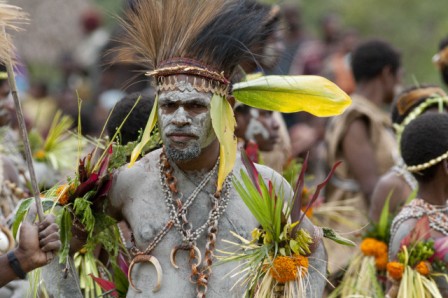


(Source)
-----------------------------------------------
OFFICIAL LINKS
OFFICIAL LINKS
* Facebook: National-Anarchist Movement Central Group (N-AM)
* Facebook: National-Anarchist Earth & Animal Activism Network
* Facebook: National-Anarchist Permaculture Information Network* Facebook: National-Anarchist Earth & Animal Activism Network
* Facebook: National-Anarchist Survivalist and Preparedness Circle
* Facebook: National-Anarchist Spanish Speaking Resistance
* Contacts: N-AM Links


 Posts
Posts

